
This guidebook will show how supervisors can ensure support staff to deliver quality services for people with disabilities whose quality of life is heavily dependent on how well those services are provided. Supervisors must ensure staff receive necessary training in their job duties, are actively supported to stay motivated to work proficiently, and, at times, effectively assisted to improve their work performance. Over the last five decades, a technology for supervising staff work performance in the human services has been evolving, derived from applied research conducted in many human service agencies. However, most supervisors have not had opportunities to become aware of these evidence-based means of fulfilling their supervisory duties. The purpose of The Supervisor’s Guidebook is to describe the existing evidence-based approach to supervision. A description of the approach is supplemented with practical suggestions based on the authors’ combined experience encompassing over 100 years of supervising staff performance in the human services. The intent is to provide supervisors with detailed information about tried and tested means of promoting diligent and proficient staff performance and to do so in a way that maximizes staff enjoyment with their work. This new third edition has been extensively revised, and a new chapter has been added on “Culturally Responsive Supervision” on supervising staff performance with awareness and consideration of varying cultural preferences and practices of individual staff.
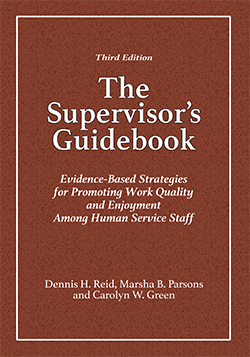
THE SUPERVISOR’S GUIDEBOOK: Evidence-Based Strategies for Promoting Work Quality and Enjoyment Among Human Service Staff (3rd Ed.)
$49.95
By Dennis H. Reid, Marsha B. Parsons, Carolyn W. Green
Published 2025 (3rd edition)
394 pp., 7 x 10
Table of Contents
Preface
Section I INTRODUCTION TO SUPERVISION
Chapter 1. The Importance of Supervision
What is Supervision?
Successful Supervision Involves Promoting Staff Work Enjoyment
Evidence-Based Supervision
Purpose of The Supervisor’s Guidebook
Intended Audience of The Supervisor’s Guidebook
Organization of The Supervisor’s Guidebook
Chapter Summary: Key Points
Chapter 2. An Evidence-Based Protocol for Supervising Staff Performance
Steps Constituting an Evidence-Based Approach to Supervision
Implementing Steps of the Supervisory Protocol in Ways to Enhance Work Enjoyment
A Practical Concern with Evidence-Based Supervision
Chapter Summary: Key Points
Section II CRITICAL SUPERVISORY SKILLS
Chapter 3. Specifying Staff Work Responsibilities
Three Criteria for Specifying Staff Performance Responsibilities
Strategies for Specifying Performance Responsibilities
Specifying Performance Responsibilities in Ways Acceptable to Staff
Chapter Summary: Key Points
Chapter 4. Training Work Skills to Staff
Basic Goals of Staff Training
Behavioral Skills Training
Two Main Formats for Training Staff
Time and Effort Considerations When Conducting Behavioral Skills Training with Staff
Making Training Acceptable to Staff
A Qualification with Staff Training
Chapter Summary: Key Points
Chapter 5. Monitoring Staff Performance
Formal Monitoring
Informal Monitoring
Special Considerations with Monitoring
Promoting Staff Acceptance of Performance Monitoring by a Supervisor
Chapter Summary: Key Points
Chapter 6. Supporting Proficient Work Performance: The Power of Feedback
The Special Significance of Positive Feedback
An Evidence-Based Protocol for Providing Feedback
Different Ways of Providing Positive Feedback
Chapter Summary: Key Points
Chapter 7. Supporting Proficient Work Performance: Special Recognition Procedures
Special Recognition Awards
Special Recognition Actions
Using Money for Special Recognition
Chapter Summary: Key Points
Chapter 8. Correcting Nonproficient Work Performance
Prerequisites for Corrective Supervision
A Serious Misconception About How to Correct Nonproficient Performance
Common Reasons for Nonproficient Staff Performance and Corresponding Corrective Actions
Performance Problems Due to Reasons Outside of the Workplace
Chapter Summary: Key Points
Chapter 9. Promoting Staff Work Enjoyment: Making Disliked Work Tasks More Enjoyable to Perform
General Considerations for Making Work Tasks More Enjoyable for Staff to Perform
A Research-Based Approach for Making Disliked Work Tasks More Enjoyable to Perform: TEMP
An Example of Applying TEMP to Make a Disliked Work Task More Enjoyable to Perform
Special Considerations for Addressing Disliked Work Tasks
Chapter Summary: Key Points
Section III RESOLVING COMMON PERFORMANCE PROBLEMS
Chapter 10. Resolving Common Performance Problems: Overview
The Basic Premise of Supervisor Accountability
Supervising in Difficult Situations
Chapter Summary: Key Points
Chapter 11. Reducing Absenteeism and Turnover
Reducing Absenteeism
Reducing Turnover
Chapter Summary: Key Points
Chapter 12. Resolving Problems with Staff Provision of Client-Teaching Services
Improving Formal Teaching Services
Promoting Naturalistic Teaching During Routine Activities
Special Considerations for Overcoming Performance Problems with Teaching Services
Chapter Summary: Key Points
Chapter 13. Reducing Frequent Nonwork Behavior
Special Considerations in Applying Certain Steps of Evidence-Based Supervision to Reduce Nonwork Behavior
General Considerations for Reducing Frequent Nonwork Behavior
Chapter Summary: Key Points
Section IV EVOLVING CONSIDERATIONS AND APPROACHES IN SUPERVISION
Chapter 14. Supervising from a Distance with Telehealth
Supervision via Telehealth: An Overview
Telehealth Specifically for Implementing Evidence-Based Supervisory Procedures from a Distance
A Notable Advantage of Videoconferencing (with Qualification)
Chapter Summary: Key Points
Chapter 15. Culturally Responsive Supervision
A Qualification with Chapter Content
Conceptual Framework
Current Recommendations for Providing Culturally Responsive Supervision
Practical Considerations
Summary and Concluding Remarks
Chapter Summary: Key Points
Section V SELECTED READINGS
Selected Readings
Index
About the Authors
Reviews
Review #1
Synopsis: Now in a fully updated and expanded third edition, “The Supervisor’s Guidebook: Evidence-Based Strategies for Promoting Work Quality and Enjoyment Among Human Service Staff” is a complete and comprehensive guidebook showing how supervisors can ensure support staff to deliver quality services for people with disabilities whose quality of life is heavily dependent on how well those services are provided.
Supervisors must ensure staff receive necessary training in their job duties, are actively supported to stay motivated to work proficiently, and, at times, effectively assisted to improve their work performance. Over the last five decades, a technology for supervising staff work performance in the human services has been evolving, derived from applied research conducted in many human service agencies. However, most supervisors have not had opportunities to become aware of these evidence-based means of fulfilling their supervisory duties.
The purpose of this expanded 3rd edition of “The Supervisor’s Guidebook” is to describe the existing evidence-based approach to supervision. A description of the approach is supplemented with practical suggestions based on the authors’ combined experience encompassing over 100 years of supervising staff performance in the human services. The intent is to provide supervisors with detailed information about tried and tested means of promoting diligent and proficient staff performance and to do so in a way that maximizes staff enjoyment with their work.
This new third edition, co-authored by the team of Dennis H. Reid, Marsha B. Parsons, Carolyn W. Green. has been extensively revised, and includes a new chapter, “Culturally Responsive Supervision”, which has been added on supervising staff performance with awareness and consideration of varying cultural preferences and practices of individual staff members.
Critique: This large format (10 x 7 x 2 inches) paperback edition of “The Supervisor’s Guidebook: Evidence-Based Strategies for Promoting Work Quality and Enjoyment Among Human Service Staff” is deftly organized into four major sections: Introduction to Supervision; Critical Supervisory Skills; Resolving Common Performance Problems; Selected Readings. Exceptionally well written, organized and presented, this third edition of “The Supervisor’s Guidebook” from Charles C. Thomas Publisher is an ideal and unreservedly recommended pick for college/university library collections and as a Social/Human Resources Administration curriculum textbook. It should be noted for personal, professional, student reading lists that “The Supervisor’s Guidebook: 3rd Edition” is also readily available in a digital book format (9780398094645, $49.95, eBook).